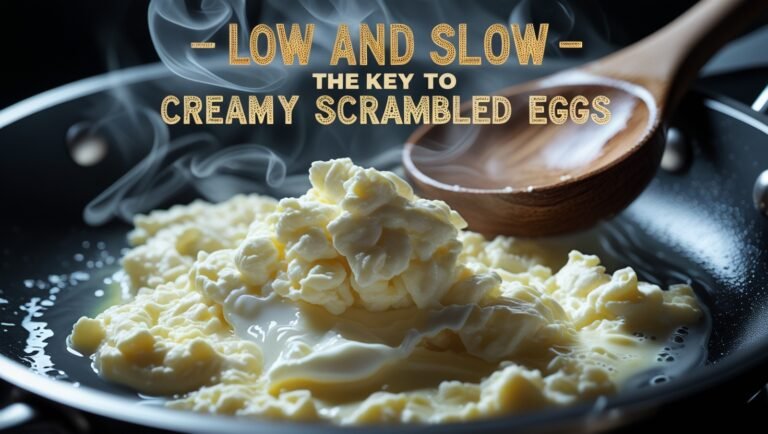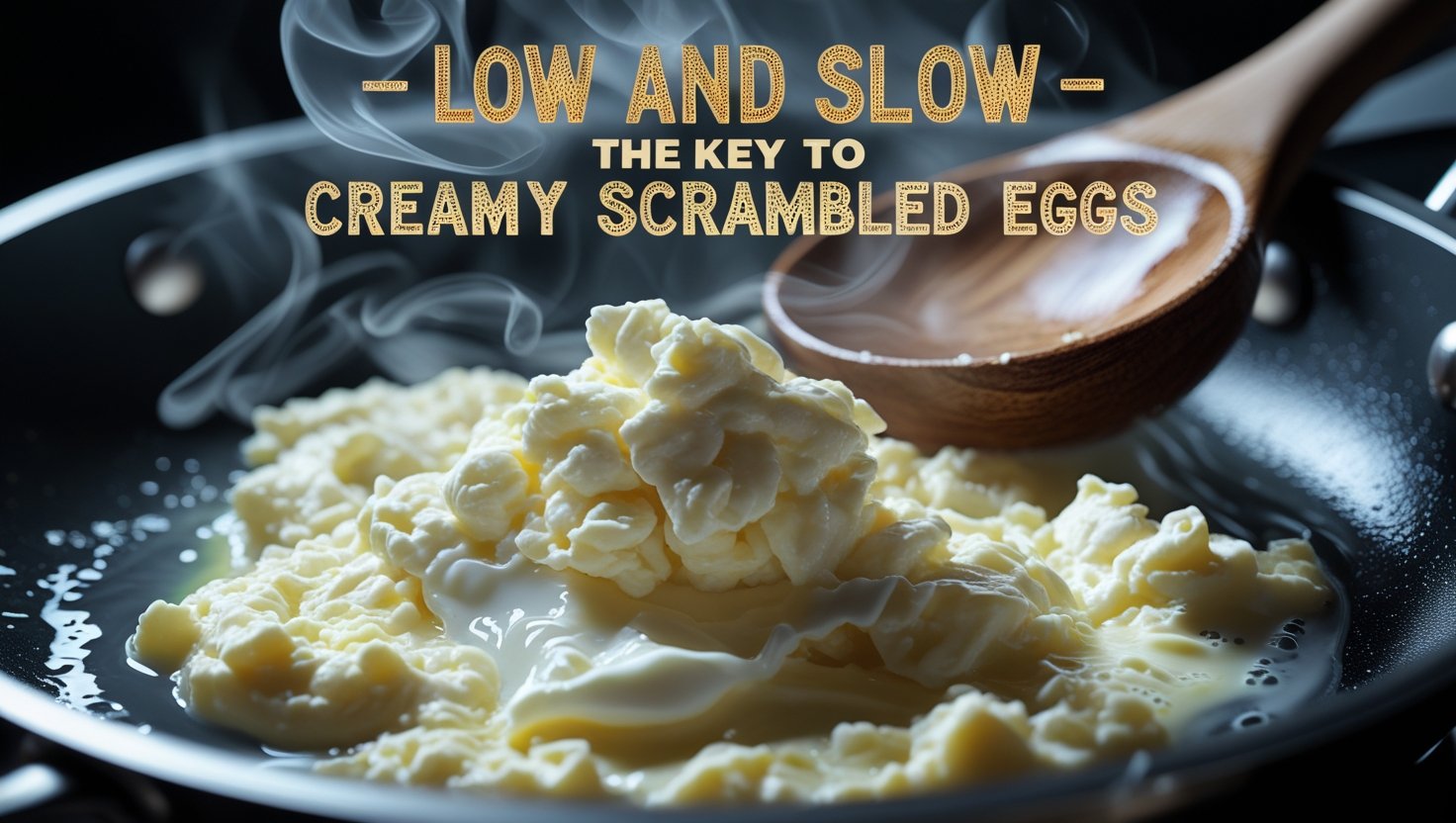
There’s a secret whispered in the kitchens of great chefs and home cooks alike: creamy scrambled eggs aren’t about fancy ingredients, they’re about patience. The magic lies in cooking them low and slow, transforming humble eggs into a velvety, custard-like masterpiece. Whether you’re a breakfast purist or a brunch enthusiast, this guide will show you how to elevate your eggs from ordinary to unforgettable.
Why “Low and Slow” Changes Everything:
Cooking eggs over high heat might be fast, but it’s also the quickest way to rubbery disappointment. When you lower the flame and slow the process, you allow the proteins in the eggs to gently coagulate, trapping moisture and creating that signature creamy texture.
The Science Behind the Creaminess:
- Protein control: Gentle heat prevents over-coagulation, keeping the eggs tender.
- Moisture retention: Slow cooking reduces evaporation, preserving the eggs’ natural water content.
- Even curds: Stirring slowly over low heat forms small, soft curds instead of large, dry chunks.
Choosing the Right Ingredients:
You don’t need a long list—just quality basics.
Eggs: The Star of the Show:
- Use fresh, organic eggs for richer flavor and brighter yolks.
- Room temperature eggs blend more smoothly and cook evenly.
Butter: Your Flavor Carrier:
- Unsalted butter gives you control over seasoning.
- Adds richness and prevents sticking.
Optional Add-ins:
- Cream or milk (a splash) for extra silkiness
- Salt and pepper—season before cooking for deeper flavor
- Chives, cheese, or herbs—add at the end to avoid curdling
Tools That Make a Difference:
The right equipment can make or break your scramble.
Non-Stick Pan:
- Prevents sticking and allows gentle heat distribution
- Ideal size: 8-inch for 2–4 eggs
Silicone Spatula:
- Flexible enough to sweep the pan clean
- Won’t scratch your non-stick surface
Step-by-Step: Mastering the Low and Slow Method:
Let’s break it down into a foolproof routine.
1. Crack and Whisk:
- Crack 3–4 eggs into a bowl
- Add a pinch of salt and whisk until fully combined
- Optional: Add a tablespoon of cream or milk
2. Heat the Pan:
- Place your non-stick pan over low heat
- Add a knob of butter and let it melt slowly—don’t let it brown
3. Pour and Stir:
- Pour in the eggs and wait 10–15 seconds
- Begin stirring gently with your spatula in slow, circular motions
- Scrape the bottom and sides continuously to form soft curds
4. Control the Heat:
- If the eggs start cooking too fast, lift the pan off the heat briefly
- Keep stirring until the eggs are mostly set but still glossy
5. Finish Off the Heat:
- Remove the pan while the eggs are slightly underdone
- Residual heat will finish cooking them to perfection
Common Mistakes to Avoid:
Even seasoned cooks can slip up—here’s what to watch for.
- High heat: Leads to dry, overcooked eggs
- Over-stirring: Can break curds and turn eggs mushy
- Adding cheese too early: Causes separation and oiliness
- Waiting to season: Salt added late won’t penetrate the eggs
Flavor Variations to Try:
Once you’ve mastered the base, get creative.
Mediterranean Style:
- Add crumbled feta, sun-dried tomatoes, and chopped spinach at the end
French-Inspired:
- Stir in crème fraîche and fresh tarragon just before serving
Spicy Kick:
- Mix in diced jalapeños and a dash of smoked paprika
Umami Boost:
- Finish with a drizzle of soy sauce and a sprinkle of furikake
Serving Suggestions:
Creamy scrambled eggs are versatile—pair them with:
- Buttered sourdough toast
- Avocado slices and cherry tomatoes
- Smoked salmon and dill
- Grated parmesan and sautéed mushrooms
Nutritional Benefits:
Eggs aren’t just delicious—they’re a powerhouse of nutrition.
- High-quality protein: Supports muscle repair and satiety
- Choline: Essential for brain health
- Vitamin D and B12: Boosts energy and immunity
- Healthy fats: Especially when cooked in butter or olive oil
Conclusion:
The secret to creamy scrambled eggs isn’t in the ingredients, it’s in the technique. By embracing the low and slow method, you unlock a texture and flavor that’s both luxurious and comforting. Whether it’s a lazy Sunday or a quick weekday breakfast, these eggs will never let you down. So slow down, stir gently, and savor every bite.
FAQs:
1. Why cook scrambled eggs on low heat?
To keep them soft, moist, and creamy.
2. Should I add milk or cream?
Optional—just a splash enhances richness.
3. When should I season the eggs?
Before cooking, while whisking.
4. Can I use olive oil instead of butter?
Yes, but butter adds more flavor.
5. How do I know when they’re done?
When they’re glossy and slightly undercooked.
6. Can I reheat scrambled eggs?
Not recommended—they lose texture.
About the Author